Vietnam Travel Guide 2026: Timing, Visa, Costs, Routes
Vietnam travel guide 2026: the three regions have opposite seasons. Visa rules, daily costs and 10 and 14-day itineraries.

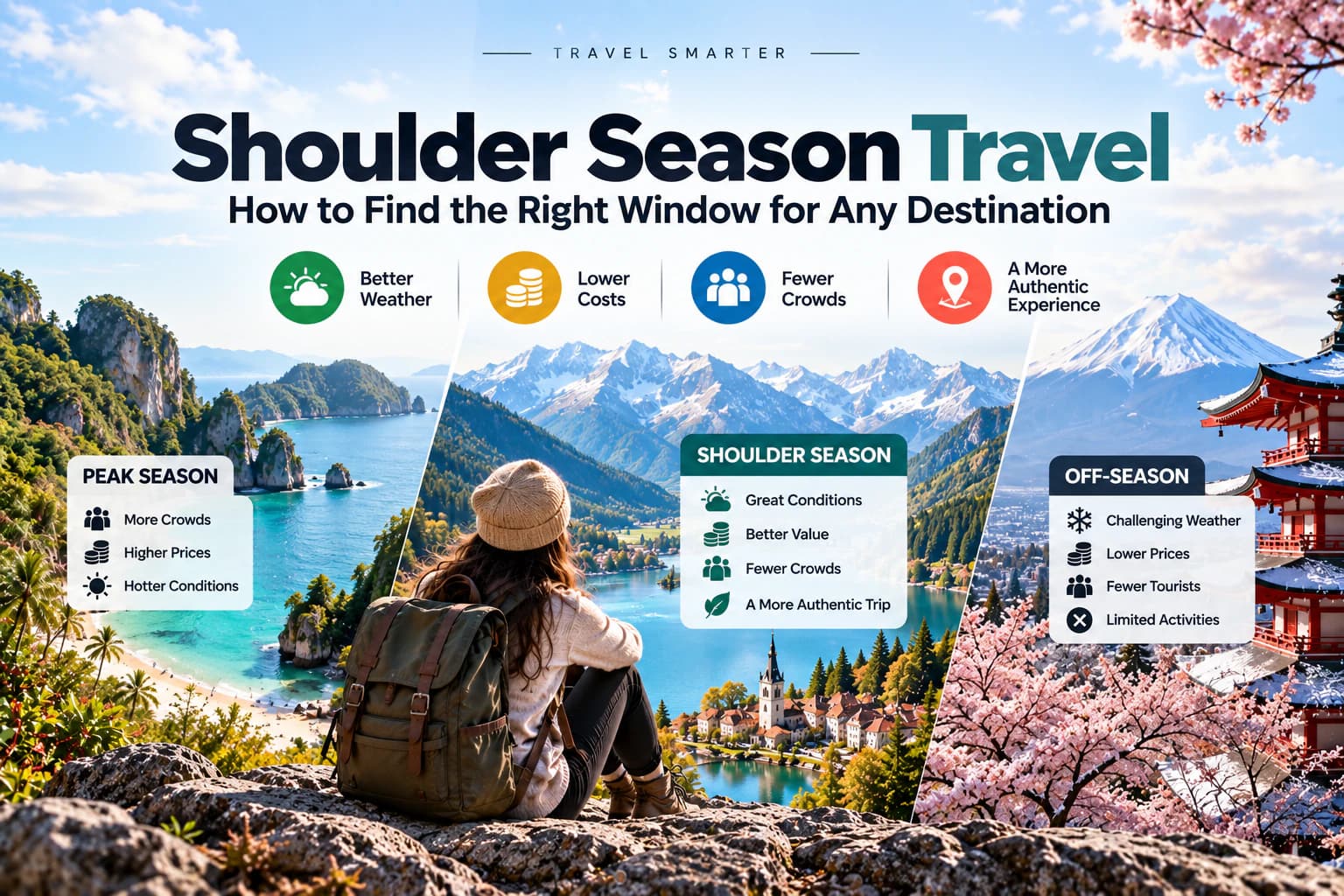
Most Vietnam guides open by telling you the best time to visit is November to April. That advice is fine if you are going to Ho Chi Minh City, and actively unhelpful if you are going to Hoi An, where those months include typhoon season.
Vietnam runs roughly 1,650 km north to south. The three regions do not share a climate, and they do not share a good season. That single fact reshapes how a trip should be planned, and it is the thing most guides flatten into one sentence.
This guide covers the timing properly, the current entry rules, what things actually cost, and how to structure ten days or two weeks.
A note on prices and rules: Costs, fares and visa terms change. Every figure here is sourced at the time of writing, but confirm current details with the official provider, the airline, the operator, or Vietnam's immigration portal, before booking.
The 30-second answer
There is no single best time to visit Vietnam, because the three regions have opposite seasons. February to April is the closest thing to a nationwide sweet spot. The e-visa is open to every nationality for up to 90 days and costs USD 25. Budget USD 20-35 a day, or USD 45-95 mid-range.
- By region: north March-April and September-November; centre February-May; south December-April
- Avoid: August-November in the centre, typhoon season for Hue, Da Nang and Hoi An
- Visa: e-visa, every nationality, up to 90 days, USD 25 single entry at evisa.gov.vn
- Daily budget: USD 20-35 budget, USD 45-95 mid-range, excluding international flights
- Trip length: 10 days for two regions, 14 for all three, fly the long legs, booking 2-3 weeks ahead
- Watch for: Tet, the Lunar New Year (17 February in 2026), transport sells out and prices rise; check the current year's dates before booking
Best time to visit Vietnam, by region
This is the section that matters most, because getting it wrong is expensive and unfixable once you have booked.
| Region | Key places | Best months | Avoid |
|---|---|---|---|
| North | Hanoi, Ha Long, Sapa, Ninh Binh | Mar-Apr, Sep-Nov | Dec-Feb (cold, overnight lows near 4°C); May-Aug (hot, humid) |
| Centre | Hue, Da Nang, Hoi An | Feb-May | Aug-Nov typhoon season; heaviest rain Sep-Nov |
| South | Ho Chi Minh City, Mekong Delta | Dec-Apr | May-Oct wet, heaviest Jun-Aug |
Read the table again with a two-week trip in mind and the problem becomes obvious. There is no month that is simultaneously ideal for all three regions.
The practical resolutions:
- February to April is the closest thing to a nationwide sweet spot. Centre and south are both good; the north is warming up and reliable by March.
- September to November is excellent in the north and poor in the centre.
- December to February is strong in the south, workable in the centre, and genuinely cold in the north.
One date to check before you book February. Tet, the Lunar New Year, moves every year; in 2026 it fell on 17 February, with the public holiday running roughly 14-22 February, useful as an illustration of the scale of disruption even though that date has now passed. Domestic flights and sleeper berths sell out around it, accommodation prices rise, and banks, government offices and many family-run businesses close for several days. The country does not shut down, the cities are busy and the atmosphere is worth seeing, but internal travel in that window needs booking months ahead rather than the two to three weeks that works the rest of the year. Check the current year's Tet dates before you book, and plan for late February onwards if you want to avoid the crunch.
If your dates are fixed and awkward, change the route rather than the dates. An October trip should lean north and south; a June trip should lean north and centre.
The upside of all this is that some part of Vietnam is in good condition nearly year-round, which is unusual.
Vietnam visa, exemptions and the arrival card
| Detail | |
|---|---|
| Who can apply | Every nationality: since August 2023 |
| Length of stay | Up to 90 days |
| Cost | USD 25 single entry / USD 50 multiple entry |
| Processing | Typically 3-5 working days: apply at least 5 days ahead |
| Entry points | 83 airports, land borders and seaports |
| Passport | Minimum 6 months validity from entry date |
Apply at the official government portal: evisa.gov.vn. Vietnam's Immigration Department moved its e-visa service to this domain (alongside thithucdientu.gov.vn) in November 2024, replacing the older evisa.xuatnhapcanh.gov.vn address. Use it rather than a search result: lookalike sites routinely charge two to four times the government fee for the identical application.
What actually changed, and when. The e-visa opened to all nationalities and extended to 90 days under Resolution 127/NQ-CP, effective 15 August 2023. The entry-point list then expanded from 42 to 83 under Resolution 389/NQ-CP of 2 December 2025: 41 additional gates, made up of 17 airports, 27 land border gates and 39 seaports. Neither is a 2026 change, and guides describing a 30-day, nationality-restricted e-visa are out of date by some years.
One caveat on that list: Long Thanh Airport, near Ho Chi Minh City, held a ceremonial opening in December 2025 but is not yet running scheduled commercial flights. Commercial operation is scheduled to begin 1 December 2026. Do not plan an arrival there until your airline confirms scheduled service.
Who does not need a visa at all. Around 38 nationalities have a unilateral exemption.
- 45 days: the United Kingdom, Japan, South Korea, Russia, Belarus, and a group of European countries including Germany, France, Italy, Spain, the Netherlands, Belgium, Switzerland, Poland, the Czech Republic, Hungary, Romania, Slovakia, Slovenia, Croatia, Bulgaria, Luxembourg and the Nordic states.
- 30 days: Cambodia, Indonesia, Kazakhstan, Kyrgyzstan, Laos, Malaysia, Mongolia, Myanmar, Singapore and Thailand.
- Not exempt: the US, Canada, Australia, New Zealand and Ireland need a visa for any tourist visit.
Exemption lists change by resolution and are the one thing here worth checking against the source before you book, the Vietnamese Embassy summary of the e-visa and exemption policy sets out the current position.
The digital arrival card. A mandatory pre-arrival declaration, officially Pre-Arrival Information (PAI), began at Ho Chi Minh City's Tan Son Nhat airport on 15 April 2026 and has since expanded. As of mid-2026 it applies at five airports: Tan Son Nhat (SGN), Phu Quoc (PQC), Noi Bai (HAN), Cam Ranh (CXR) and Da Nang (DAD): plus the Dong Dang land border and seaports nationwide, with a full nationwide rollout planned. It is separate from the e-visa, and the scope is still moving, so confirm the requirement for your specific entry point close to departure.
What Vietnam actually costs per day
Excluding international flights and the e-visa.
| Level | Per day | What that looks like |
|---|---|---|
| Budget | USD 20-35 | Hostel dorms, street food, sleeper buses |
| Mid-range | USD 45-95 | Three-star hotels, mixed dining, some flights |
| Higher estimates | USD 30-50 / USD 80-150 | Same tiers, less frugal assumptions |
Two weeks mid-range lands around USD 1,400-2,800.
Accommodation: hostels USD 8-12 · budget guesthouses USD 10-30 · three-star USD 25-50 · boutique or four-star USD 60-120. Solo travellers should check whether a rate is quoted per room or per person, which is the difference that decides whether you avoid a single supplement.
Food is where the budget is actually decided:
| Local | Tourist-facing | |
|---|---|---|
| Breakfast | USD 5-10 | USD 8-15 |
| Lunch | USD 4-8 | USD 10-18 |
| Dinner | USD 8-15 | USD 15-25 |
Street food runs USD 2-4 a meal. The gap between the two columns, compounded across three meals for two weeks, is larger than most people's flight savings.
Where value is best: Hoi An and Da Lat consistently beat Hanoi's Old Quarter and central Ho Chi Minh City on accommodation and food, where tourist density pushes prices up. Weighting nights toward the better-value places is a real lever.
Getting around Vietnam: flights, trains and buses
| Mode | Route | Cost | Time |
|---|---|---|---|
| Flight | Hanoi ↔ HCMC | USD 35-80 | ~2h |
| Flight | Hanoi ↔ Da Nang | USD 25-60 | 1h 20m |
| Flight | HCMC ↔ Da Nang | USD 25-55 | ~1h 15m |
| Sleeper bus | Hanoi → Da Nang | USD 20-35 | 16-20h |
| Train | Hanoi → Hue | USD 20-50 | overnight |
| Train | Full Hanoi → HCMC | - | ~32-35h |
Book two to three weeks ahead. Last-minute flights run three to five times the advance fare, and that single decision moves a budget more than most others. Sleeper berths on the SE1 and SE3 trains sell out first.
On the train: the Reunification Express covers 1,726 km along the coast. The full run is too long for most itineraries, but the Hue to Da Nang stretch over the Hai Van Pass is worth planning around. Book the 4-berth soft sleeper for overnight legs.
How many days do you need in Vietnam?
The route: Hanoi → Ha Long Bay or Ninh Binh → Hue and Hoi An → Ho Chi Minh City → Mekong Delta. Run in either direction; north-to-south is more common, and southbound means finishing in the warmest region in cooler months.
Sapa and Phu Quoc are add-ons, not core stops on two weeks.
10-day Vietnam itinerary
| Days | Plan |
|---|---|
| 1-3 | Hanoi. Old Quarter, street food, adjust to the traffic. |
| 4 | Ninh Binh day trip, or overnight Ha Long Bay cruise. |
| 5 | Fly to Da Nang (1h 20m). Transfer to Hoi An. |
| 6-8 | Hoi An and Hue. Old town, tailors, Hai Van Pass. |
| 9-10 | Fly to Ho Chi Minh City. City, War Remnants Museum, depart. |
2-week Vietnam itinerary
| Days | Plan |
|---|---|
| 1-3 | Hanoi |
| 4-5 | Ha Long Bay overnight, plus Ninh Binh |
| 6 | Travel to the centre, fly, or overnight train for the experience |
| 7-9 | Hue and Hoi An |
| 10 | Buffer. Weather, rest, or a slower transfer day. |
| 11-13 | Ho Chi Minh City and the Mekong Delta |
| 14 | Depart |
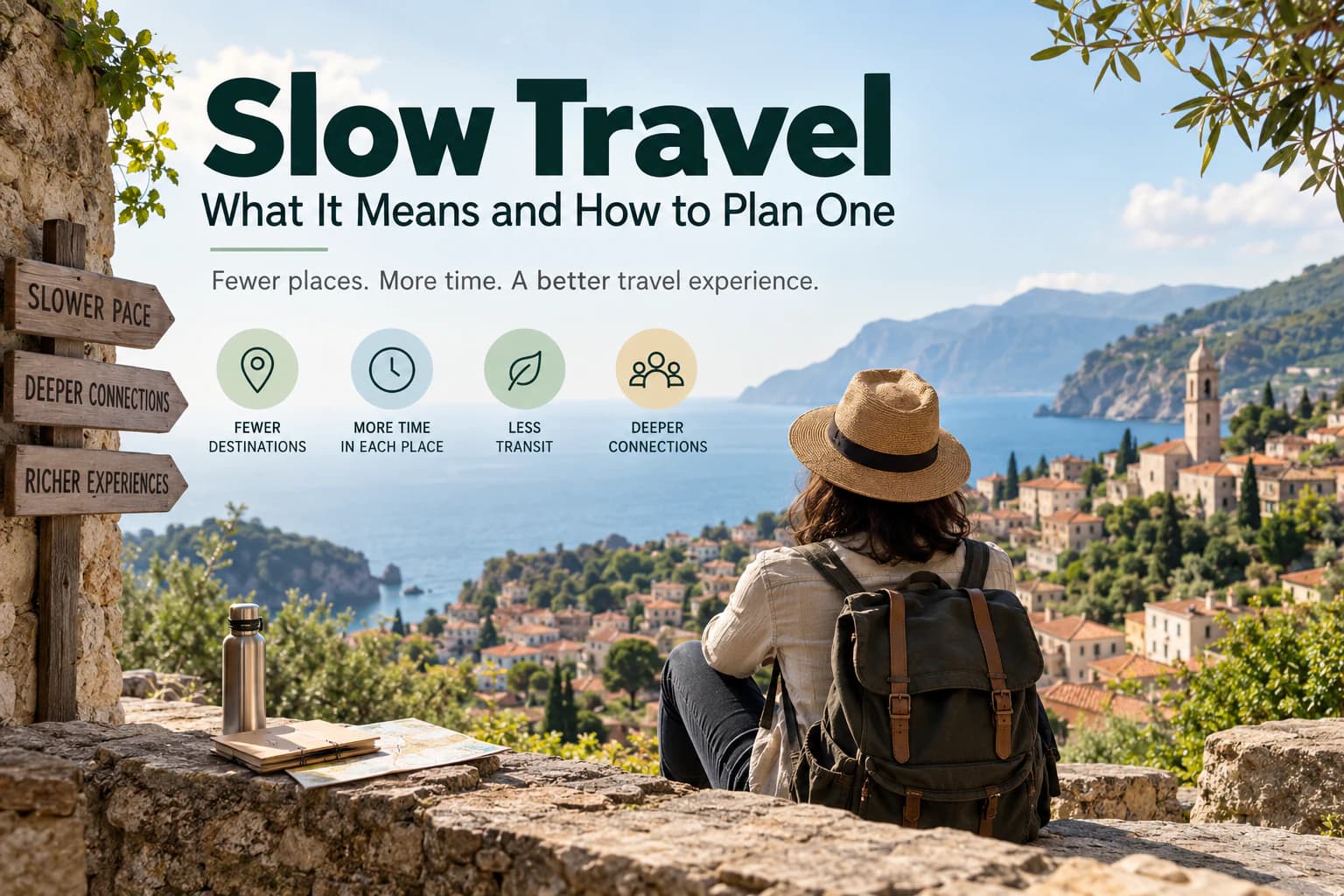
The buffer day is not padding. Typhoon-season disruption in the centre and sold-out transport are both routine, and itineraries without slack lose their best day rather than their worst. For the general logic behind how many bases and how much transfer time a trip this length can actually support, see our guide to planning a slow-travel itinerary.
Money, SIM cards and scams in Vietnam
Cards and cash. Cards work in hotels, mid-range restaurants and city shops. Cash is needed for street food, markets, local transport and most of rural Vietnam. The currency is the dong.
SIM. Viettel has the broadest 4G and 5G coverage, ahead of MobiFone and Vinaphone. Tourist plans run 60,000-200,000 VND (USD 2-6.50) for 15-30 days, with unlimited data on higher tiers. eSIM is simpler if supported: Airalo runs about USD 32 for 20 GB on the Viettel network, installable before you fly.
The two scams that actually catch people:
- Money switching. A 500,000 VND note is swapped for a 20,000 VND note during a transaction, both are blue. Paying with small notes or exact amounts removes most of the risk.
- Transport. Tampered meters and fake ride-hailing drivers. Grab is the most reliable defence. Among street taxis, Vinasun (white) and Mai Linh (green) have better reputations.
The real safety issue is traffic, not crime. Crossing roads in Hanoi and Ho Chi Minh City takes adjustment, and motorbike hire carries genuine risk, including insurance problems if you are not correctly licensed.
Food in Vietnam, including vegetarian
Vietnam is better for vegetarians than its reputation suggests, because of Buddhist cooking. Look for com chay vegetarian restaurants, present in every city, and vegetarian versions of the staples: pho chay, banh mi chay.
The catch: fish sauce and meat-based broths are used routinely and are not always mentioned. Ask directly rather than assuming a vegetable dish is meat-free. For no onion or garlic, ask for khong hanh toi.
Common mistakes
- Treating Vietnam as compact. It is 1,650 km end to end. Internal travel time is what quietly destroys short itineraries.
- Applying "November to April" to a Central Vietnam trip. That is the region's wettest, most storm-prone window.
- Booking domestic flights late. Three to five times the advance fare.
- Eating only in tourist-facing restaurants. Roughly doubles the food budget for worse food.
- Using an unofficial visa site. Two to four times the government fee for the same application.
- Assuming card acceptance. Fine in cities, unreliable outside them.
- Hiring a motorbike without the correct licence. An insurance problem as much as a safety one.
What nobody tells you
- There is no month that suits all three regions. Every "best time to visit Vietnam" answer is regional, and anyone giving you one month is not asking where you are going.
- The official e-visa portal moved in November 2024 to
evisa.gov.vn. Older guides still send readers toevisa.xuatnhapcanh.gov.vn, which is the previous address. - The 90-day, all-nationality e-visa is not new: it took effect in August 2023. Guides describing a 30-day, restricted system are several years out of date.
- 41 entry gates were added in December 2025, taking the total to 83, which makes overland entry from Cambodia or Laos far more practical on an e-visa than it used to be.
- Hoi An and Da Lat are cheaper than the big cities for the same standard, which is unusual, normally the smaller tourist towns cost more.
- The Hue-Da Nang train stretch is one of the standout sections of Vietnamese rail, and it is short enough to do without committing to a 30-hour journey.
India-specific notes: visa, flights and budget
Vietnam has become an increasingly popular destination for Indian travellers, with reported arrivals up sharply and direct routes expanding.
Entry. Indian passport holders are not exempt and need an e-visa: USD 25 single entry, up to 90 days, typically 3-5 working days to process. Apply at the official portal, evisa.gov.vn. Six months' passport validity required.
Flights. Direct services run from Delhi, Mumbai and Kolkata to Hanoi and Ho Chi Minh City on Air India, IndiGo, VietJet Air and Vietnam Airlines. Delhi-Hanoi is around 4h 30m; Delhi-Ho Chi Minh City around 5h, covering roughly 3,100 km. Published starting fares have been around Rs 12,000-14,500, though real pricing varies widely by season and lead time.
Budget in INR. Reported ranges:
| Trip | Cost per person |
|---|---|
| Budget, ~8 days including flights | Rs 45,000-60,000 |
| Mid-range | Rs 65,000-95,000 |
| 7-day Hanoi, Ha Long, Da Nang, Hoi An | Rs 68,000-1,02,000 |
| Return fares, shoulder season | Rs 18,000-28,000 |
For a longer-haul comparison, see our Europe trip from India budget guide.
Practical notes.
- Vegetarian food is more available than expected via com chay restaurants, and there are Indian restaurants in Hanoi, Ho Chi Minh City, Da Nang, Nha Trang and Phu Quoc.
- Time difference. Vietnam uses UTC+7 year-round. That puts Vietnam 1.5 hours ahead of India (IST), so jet lag is negligible, a real advantage over European trips.
- Do not rely on UPI. An India-Vietnam UPI linkage has been announced, but acceptance is not established on the ground the way it is in some other markets. Carry a forex or travel card with low markup, plus dong in cash.
- No visa on arrival. The e-visa must be applied for before you fly, unlike some other Southeast Asian destinations.
The bottom line
Vietnam is one of the better-value destinations in Southeast Asia, and entry is easier than its reputation suggests: 90 days, every nationality, 83 entry points.
The thing to get right is timing, and it is not the thing most guides help with. Decide which regions you want first, then pick the month, rather than picking the month and assuming the whole country cooperates. If you want the full north-to-south run with the fewest compromises, aim for February to April, checking your dates against Tet.
For a comparison with the region's other headline destination, see our 10-day Bali itinerary. And if you are flying long-haul to reach it, our jet lag protocol covers arriving usable rather than losing day one.
Related reads:
Frequently asked questions
Answers to the most common questions about this topic.
There is no single answer, because Vietnam runs about 1,650 km north to south and its three regions have conflicting seasons. Northern Vietnam is best in March-April and September-November. Central Vietnam is best February-May, and has a typhoon season running roughly August to November. Southern Vietnam is dry and warm from December to April. The commonly quoted advice that November to April is the best time to visit Vietnam works for the south, but it puts you in Hoi An during the wettest, most storm-prone part of its year.
Roughly August to November. That window covers Central Vietnam's typhoon season, and September, October and November bring the region's heaviest rainfall. Hue, Da Nang and Hoi An all sit in this belt. Flooding in Hoi An's old town is a regular occurrence in these months. If your trip is fixed for October and you want beach and old-town weather, the south is the safer bet.
Most travellers need an e-visa. It is open to every nationality and allows stays of up to 90 days, a change that took effect in August 2023 rather than recently. It costs USD 25 for single entry and USD 50 for multiple entry, with processing typically taking 3 to 5 working days. Around 38 nationalities are exempt: the United Kingdom, Japan, South Korea, Russia, Belarus and a group of European countries including Germany, France, Italy, Spain, the Netherlands, Belgium, Switzerland, Poland, the Czech Republic, Hungary, Romania, Slovakia, Slovenia, Croatia, Bulgaria, Luxembourg and the Nordic states have a 45-day exemption. Cambodia, Indonesia, Kazakhstan, Kyrgyzstan, Laos, Malaysia, Mongolia, Myanmar, Singapore and Thailand have 30 days. US, Canadian, Australian, New Zealand and Irish citizens are not exempt and need a visa for any tourist visit.
For a segment, yes. For the full run, most travellers find it too long. The North-South Railway covers 1,726 km between Hanoi and Ho Chi Minh City, and the complete journey takes roughly 32 to 35 hours depending on the service. Hanoi to Hue costs about USD 20-50. The 4-berth soft sleeper is the class most travellers find comfortable for overnight legs. Book two to three weeks ahead for sleeper berths, and note that the SE3 and SE4 services are generally considered the best of the four, using newer carriages and timed for daylight through the Hai Van Pass. The Hue to Da Nang coastal stretch over the Hai Van Pass is the segment worth planning around.
Ten days covers one end of the country plus the centre without rushing. Two weeks lets you do north, centre and south at a reasonable pace, which is the classic route. Anything under a week means picking one region and staying there. A common planning error is treating Vietnam as a single compact destination. It is roughly 1,650 km end to end, and internal travel time is the constraint that quietly eats short itineraries.
Vietnam is generally regarded as safe for visitors, and the risks most travellers encounter are financial rather than physical: scams, overcharging and road traffic. Traffic is the genuine hazard. Crossing roads in Hanoi and Ho Chi Minh City takes adjustment, and motorbike hire carries real risk for inexperienced riders, including insurance complications if you are not correctly licensed. Check your own government's current travel advice before departure.
Not yet for scheduled commercial flights. Long Thanh International Airport, about 40 km east of Ho Chi Minh City, held a ceremonial technical opening in December 2025 with a small number of special and technical flights. Commercial operation is scheduled to begin 1 December 2026, with trial operations planned in the months before that. It is intended to take over much of the international traffic currently handled by Tan Son Nhat, but until scheduled service actually begins, book Tan Son Nhat (SGN) unless your airline specifically confirms Long Thanh service.
Yes, and the penalty for not doing so is steep. Fares booked two to three weeks ahead run USD 25-80 depending on the route, but last-minute fares can be three to five times higher. The Hanoi to Ho Chi Minh City corridor has departures every 30 to 60 minutes at peak times, so availability is rarely the problem, price is. The same applies to sleeper train berths, where SE1 and SE3 sell out first.
It is one of the country's most heavily visited attractions, and the experience varies enormously by operator and season. The scenery is genuinely remarkable; the crowding and the quality gap between cruise operators are the real variables. Ninh Binh, sometimes described as Ha Long Bay on land, is a common alternative for travellers who want comparable karst landscapes with fewer boats. Many two-week itineraries include one or the other rather than both.
Filed under
Written by
We research travel, fitness and wellness, and publish what holds up. See our editorial policy.