The step-count guide traces the 10,000 target back to a 1965 pedometer advert and shows what the research actually supports, which is lower. The strength-training guide covers how much is enough as training shifts from aesthetic to protective with age. The creatine guide looks specifically at postmenopausal evidence, where the picture is more encouraging than the general muscle-building claim most marketing leans on.
The measurement side gets the same treatment: grip strength is one of the better-studied markers of how the next decades tend to go, and the interval-walking method behind the 'Japanese walking' label is research from 2007 wearing a viral name. Small, well-evidenced habits rather than a longevity protocol with a price tag.
See the other 4 guides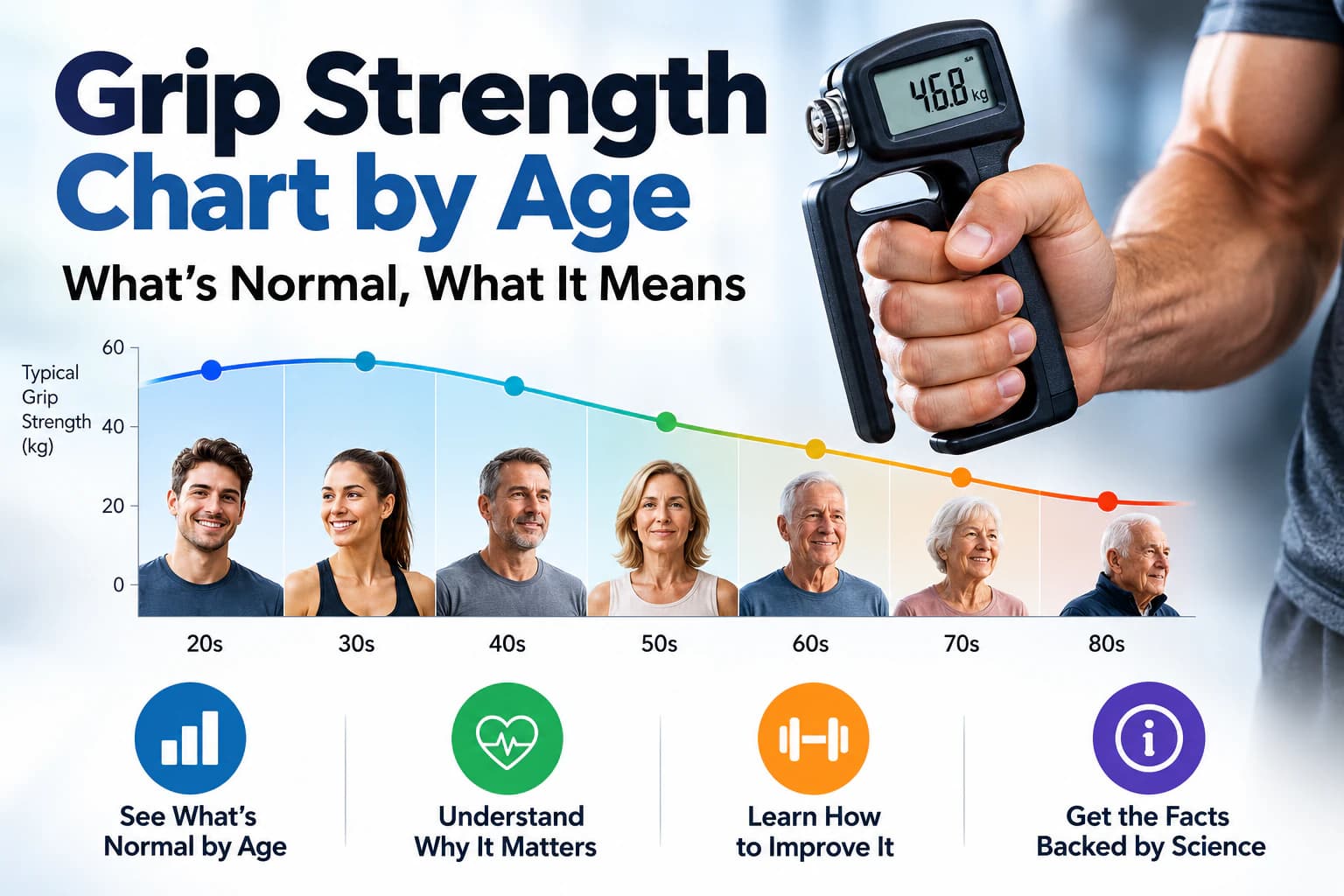
The rest of training for longevity

Japanese Walking: What It Is and What the Science Shows
Japanese walking is a viral label for interval-walking research since 2007. What it gets right, and what it oversells.
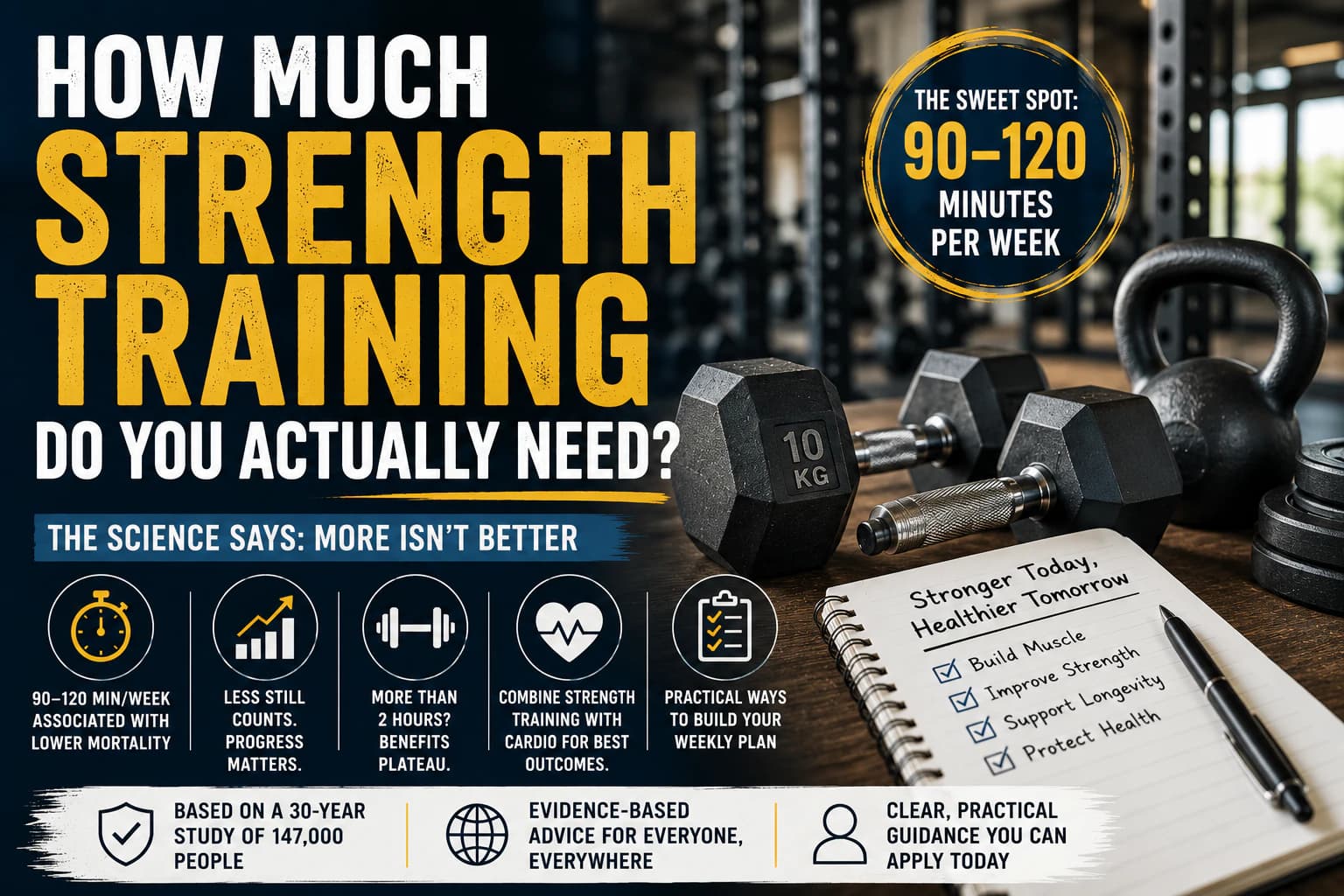
How Much Strength Training Do You Actually Need?
How much strength training per week? What a 30-year study of 147,000 people found, and why more than 2 hours adds nothing.

Creatine for Women: What the Evidence Actually Shows
Creatine for women: what the research supports on dose, muscle, menopause, hair loss and bloating, and what it does not.
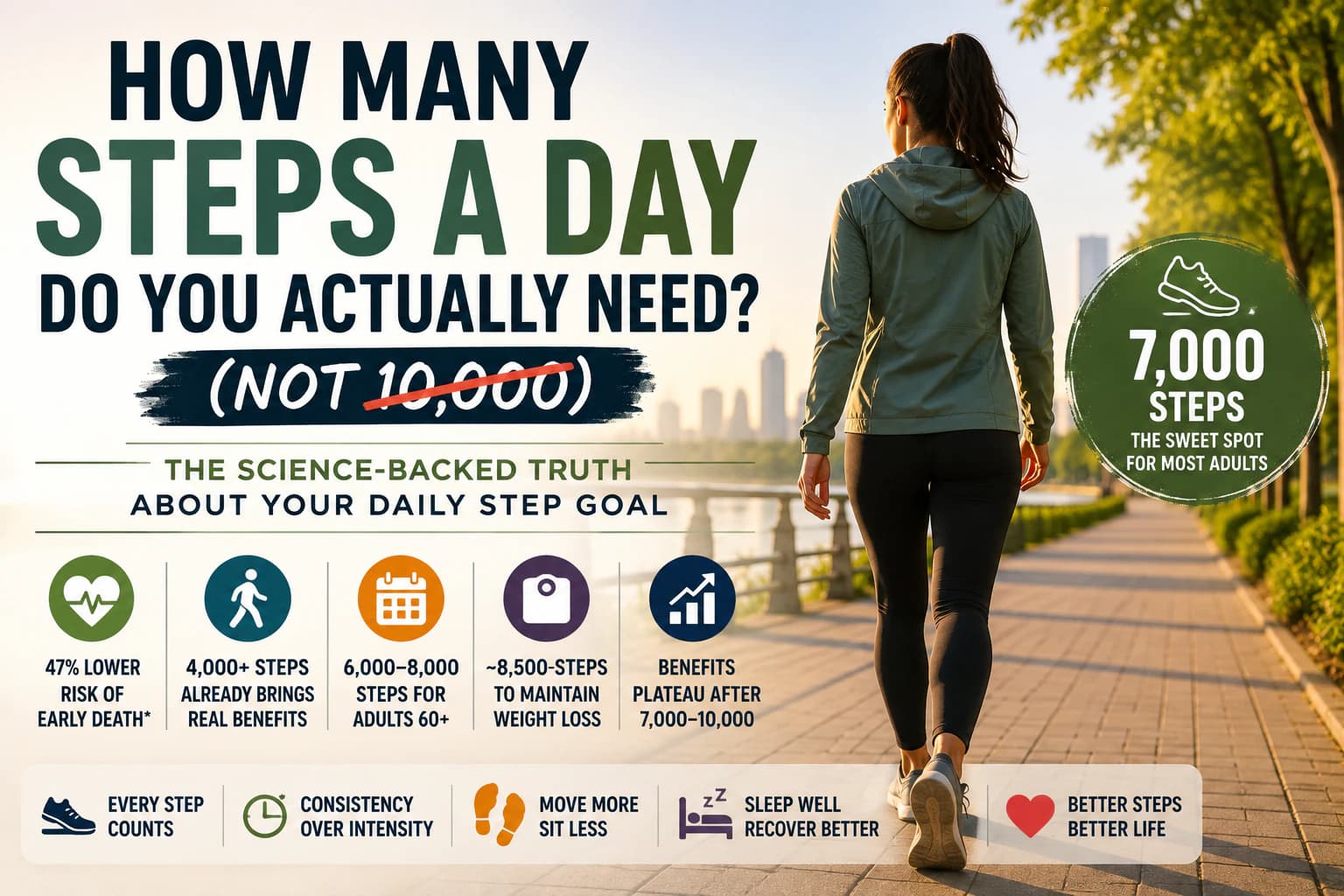
How Many Steps a Day Do You Actually Need? (Not 10,000)
How many steps a day you actually need: research points to 7,000, not 10,000, and less after 60. Your target by age.
Keep going
Every topic collects the guides that cover it, with its own introduction to what is there.